Hamas emerged in Gaza in 1987 during a period marked by widespread protests against the Israeli occupation. Its main goal is to establish an Islamic state in the region that encompassed Palestine during the British mandate, including the current territories of Israel, the West Bank, and Gaza.
Context
On October 7th, the radical Islamic group of Palestinian origin, Hamas, launched a large-scale attack against Israel. Simultaneously with the rocket attacks, militants blew up the border fence between Gaza and Israel. The Israeli government formed a war cabinet with opposition politicians and declared that the country is at war.
Israel and Hamas have previously clashed, but experts claim that never with the intensity of the recent attacks.
Market Reaction
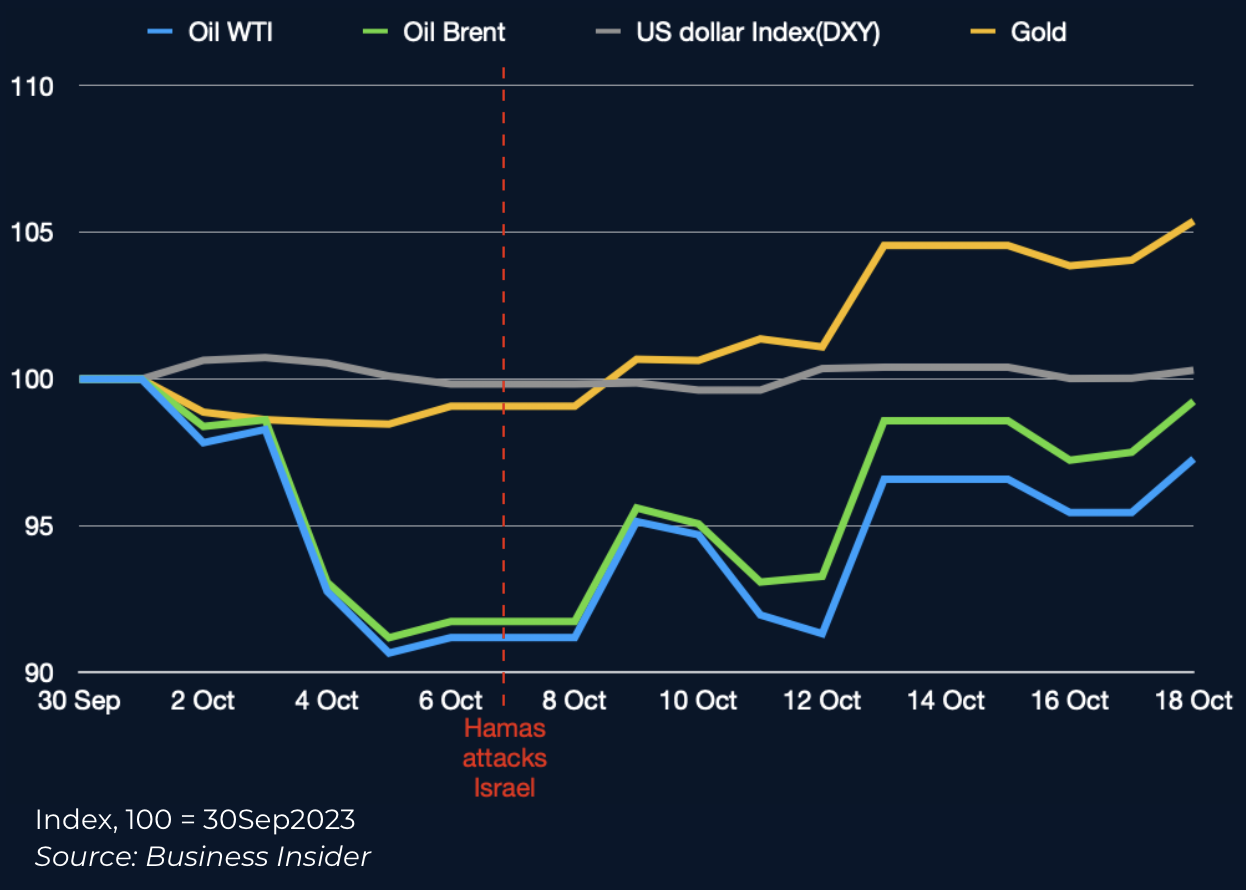
- Oil prices surged the day after the attack, with the price of Brent crude oil and WTI crude oil increasing by more than 4%, causing a rally in the shares of publicly traded oil companies.
- Safe haven assets such as gold and the US dollar saw increased demand due to geopolitical risks, leading to a rise in their prices.
- The growing geopolitical risk also boosted demand for 10 and 20-year US Treasury bonds, pushing their yields lower.
What to expect?
The repercussions on the markets will likely depend on whether the conflict spreads to the rest of the Middle East. If Iran, a significant oil producer, becomes involved, it could raise the price of oil, generating inflationary pressures on the economy.
Specialists suggest that the impact of geopolitical conflicts on the markets tends to be short-lived. Janet Yellen, the US Treasury Secretary, shares this perspective, believing that the war between Israel and Hamas will have a limited impact on the global economy.


