The U.S. presidential election will be held on November 5, with Kamala Harris and Donald Trump competing in a close race. On the same day, the entire House of Representatives and one-third of the Senate will also be up for election, potentially influencing control of Congress. These results will set the rules guiding economic development and the markets in the coming years, making it crucial to analyze their potential impact on the capital markets and the direction of various sectors and financial instruments in the short and medium term.
Tax Proposals
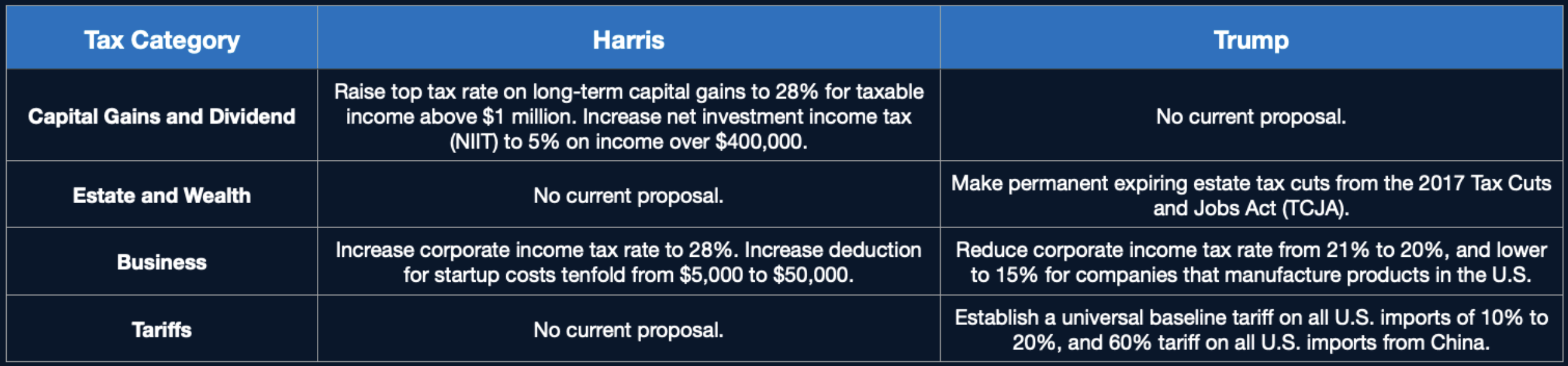
Kamala Harris and Donald Trump have opposite approaches to tax policy. While Trump focuses on broad tax cuts, Harris aims to increase taxes on large corporations and capital gains while promoting deductions for small businesses and startups.
How does it affect the market?
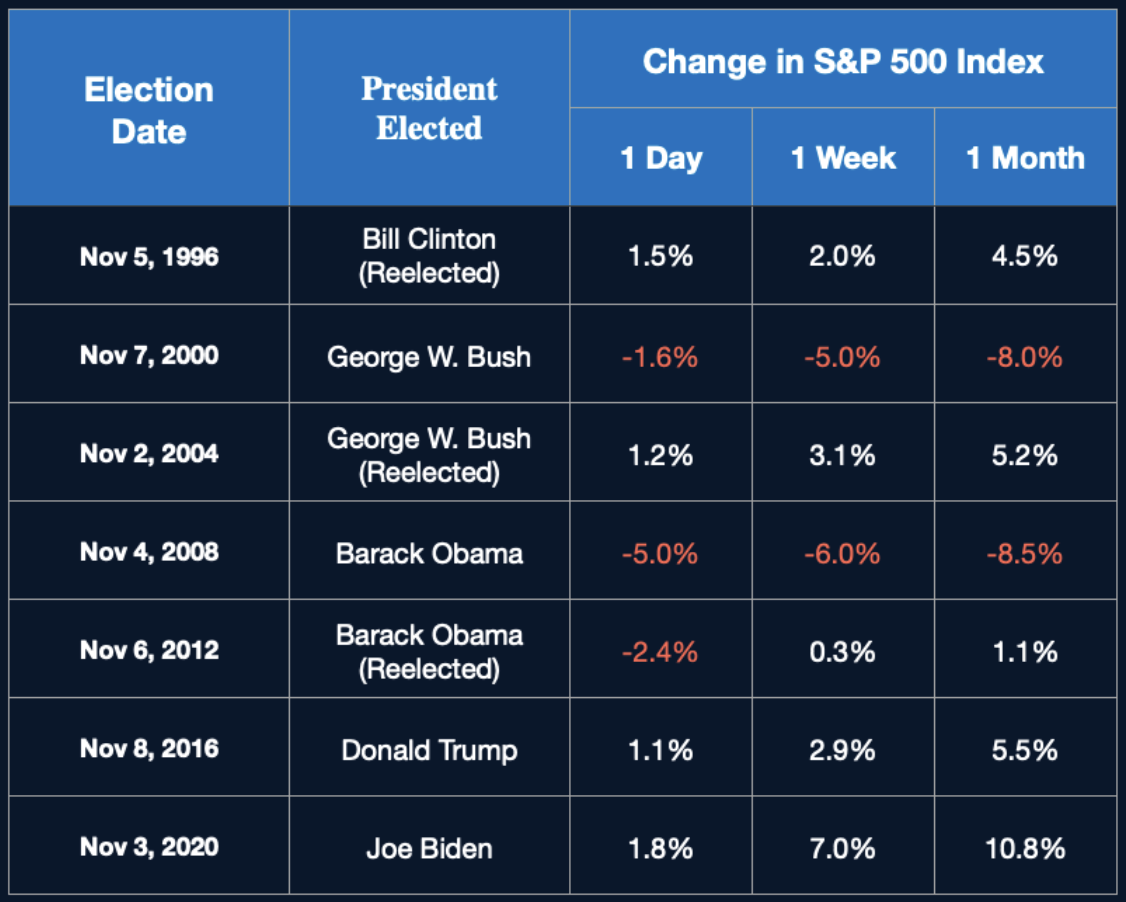
The S&P 500 index reacts differently depending on whether a Democrat or a Republican victory occurs in the U.S. elections. Republican victories, such as Donald Trump's in 2016, typically lead to immediate market gains due to their pro-business policies, resulting in a 5% increase in the following month.
In contrast, Democratic elections tend to generate more initial caution due to expectations of increased regulation and public spending. However, after Joe Biden's victory in 2020, the S&P 500 rose by 10.8% within a month, driven by expectations of recovery and fiscal incentives.