The Fed, through the FOMC (Federal Open Market Committee), meets eight times a year to make monetary policy decisions, aiming to promote maximum employment and maintain price stability. The Fed has an inflation target of 2%, and one of its key instruments is the interest rate. The next meeting is scheduled for December 12-13.
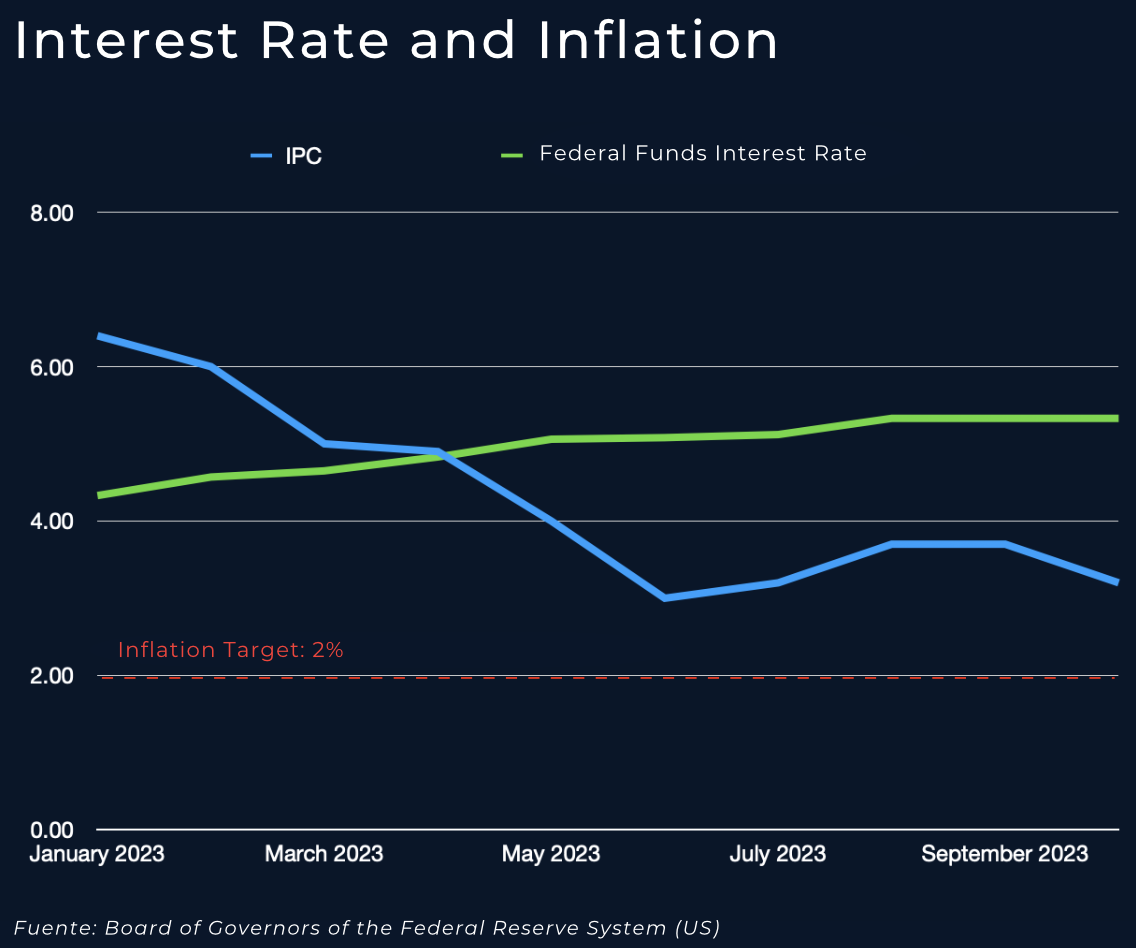
Interest Rate and Inflation
- According to the chart, we can observe a decline in inflation, which was 6.4% in early January and dropped to 3.2% in October of this year. This was accompanied by an increase in the interest rate, which was 4.3% in January and remained at 5.3% in October.
- Since the beginning of the year, the Fed has been working to control inflation while simultaneously preventing the interest rate hikes from triggering a recession, a scenario that most experts have referred to as a "soft landing."
- After the meeting, the "Fed Minutes" will be released, providing a detailed insight into monetary policy decisions.
Market Expectations and Consequences
- Most analysts believe that the Fed will keep the interest rate unchanged within a range of 5.25% to 5.50%.
- The Fed's decisions influence the expectations of economic agents and, consequently, their investment decisions. Likewise, the impact on the fixed-income market would be reflected in bond prices, which move inversely to interest rate changes (rising or falling).
- Meanwhile, the equity market would also be affected, as an interest rate hike would increase debt costs and could impact corporate profitability.
- Regarding the foreign exchange market, a potential interest rate hike would attract capital to the U.S. economy, contributing to the appreciation of the dollar and increasing its value relative to other currencies.


