Throughout history, protectionist policies have had mixed outcomes. This year, the U.S. has imposed new tariffs, leading to trade retaliation and increasing uncertainty and tension in the markets.
This draws a parallel to 1930, when the Smoot-Hawley Act, an aggressive tariff policy, triggered a global trade war and deepened the Great Depression. Understanding this precedent is crucial for assessing today’s economic risks.
Parallels between 1930 and 2025
It is essential to analyze the similarities and differences between both episodes to understand the possible future implications.
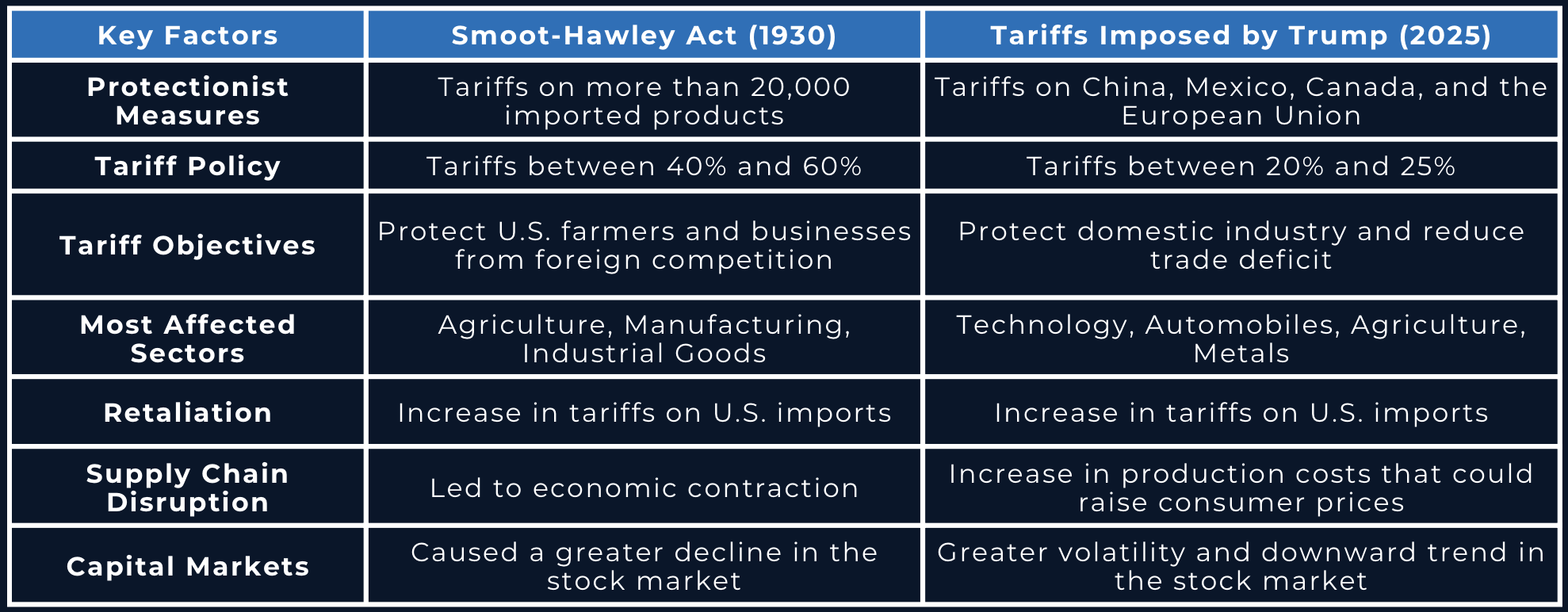
Consequences of the Smoot-Hawley Act (1930)
- Decline in international trade: Between 1929 and 1933, international trade shrank by 66%. The rise in the prices of imported goods led to a decrease in demand.
- Higher unemployment and economic contraction: The drop in both domestic and international demand for goods caused layoffs and a downturn in the economy.
- Uncertainty in the markets: The act, combined with the effects of the 1929 crash, led to a loss of confidence in the U.S. economy and contributed to a further decline in the stock market.
- Difficulties in multilateral cooperation: Retaliatory measures triggered a cycle of protectionist policies, intensifying international tensions and pressures.
What can be expected?
- Economic slowdown: The increase in tariffs could lead to a stagnation of the global economy.
- Reversal of trade policy: If the negative effects of the tariffs continue to grow, political pressure may build to reverse or adjust them.
- Shift in trade alliances: A shift in trade alliances is possible, which could reduce U.S. influence in international trade.
At Numa Americas Corp, we are constantly monitoring market volatility and taking strategic actions to mitigate risks and safeguard the interests of our clients.


