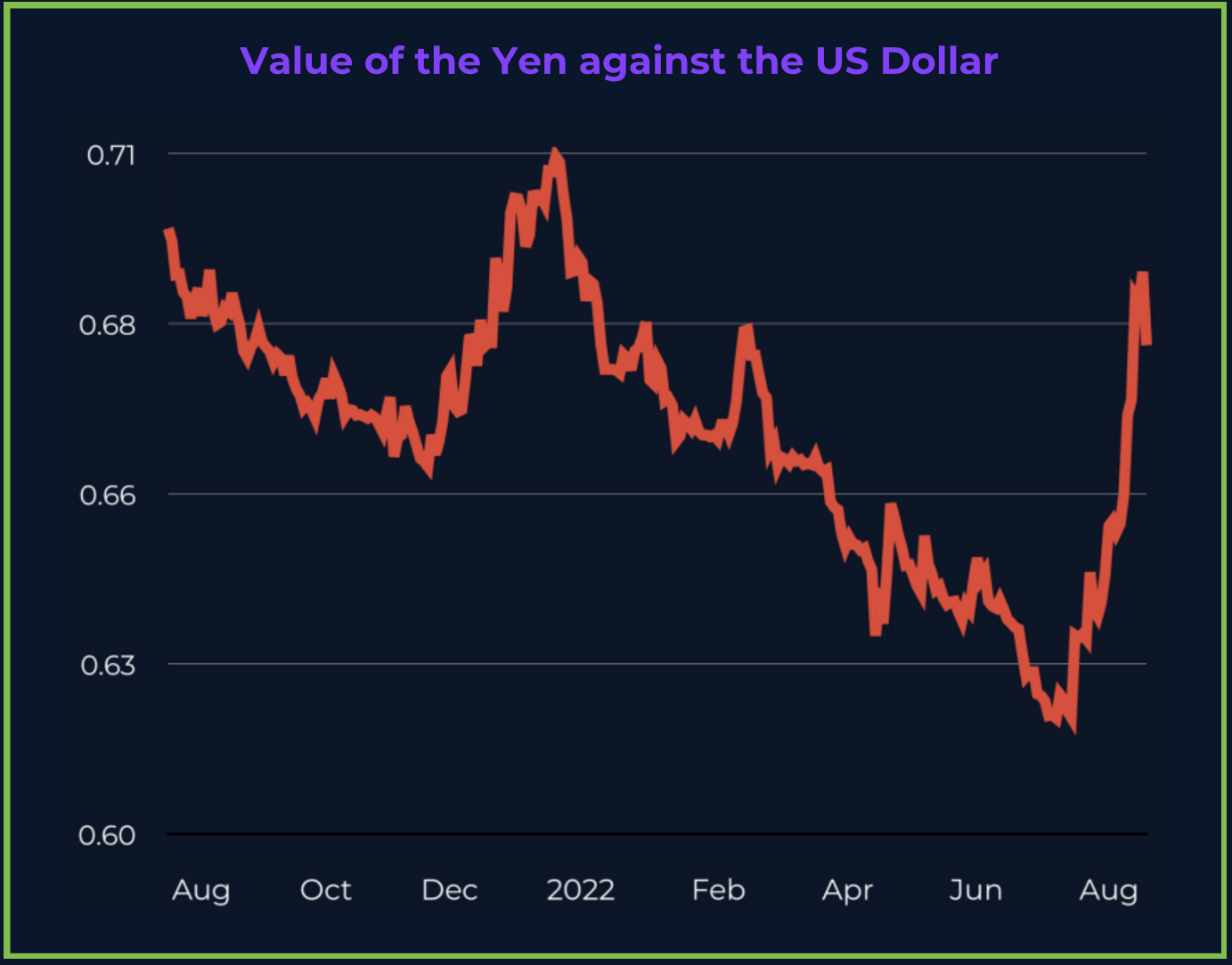
Recent significant market declines, particularly in early August, cannot be solely attributed to recession fears, slowing employment, or geopolitical tensions as many headlines suggest. The true culprit behind this market turmoil lies in a more technical financial phenomenon: the forced liquidation of Japanese Yen Carry Trades. This investment strategy took a hit when the Japanese Yen appreciated by over 15%, forcing investors to massively sell leveraged assets, triggering a domino effect across the markets.
Despite this volatility, at Numa we believe we are not facing a broad market crisis. In fact, the majority of S&P 500 stocks continue to exhibit an upward trend. Currently, 78% of the index's components show signs of strength, suggesting that the recent index pullback may be more of a pause than the start of a sustained decline. This disparity between the index's decline and the strength of its components indicates that the market still has a solid foundation.
Additionally, the recent market consolidation in July, with the S&P 500 posting a 14.4% annualized return, is indicative of a healthy adjustment within a larger bullish cycle. These types of consolidations are common and necessary to maintain long-term market stability. Most sectors closed the month with gains, reinforcing the idea that the overall market remains resilient.
While the unwinding of Japanese Yen Carry Trades has caused a sharp market decline, underlying fundamentals suggest that this is a temporary setback rather than a crisis. With a vast majority of stocks still trending upwards and signs of a healthy market, it is important for you, our clients, to remain calm and continue to focus on the long-term outlook, which remains positive.


